
Our Take On Underfloor Heating Installation Myths
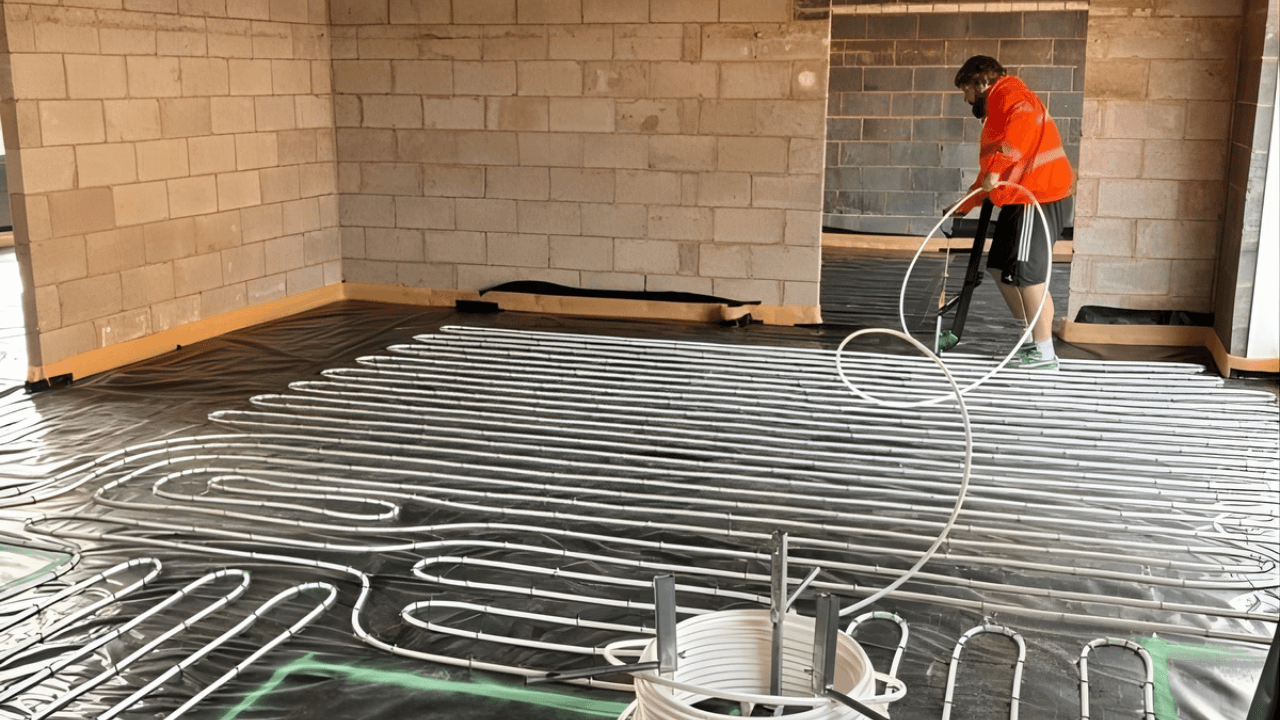
When researching the pros and cons of underfloor heating, you’ll come across many myths and misinformation that might discourage you from committing to it. We’ve been installing wet underfloor heating systems and liquid screed for years, and have recently introduced electric floor heating and heat pump to our services.
In today’s blog, with our vast experience, we’ll explore what exactly makes some people believe certain things about underfloor heating installation and the truth behind each.
Is Underfloor Heating for New Builds Only?
Many believe that this modern heating solution is for modern homes built after the year 2000, or impossible for homes built before the 1900s, but that’s false. This myth stems from a variety of sources, such as confusion over planning permission and whether homes with suspended wooden flooring can have heating.
It’s very possible to retrofit both wet and electric floor heating into older homes and listed buildings. Underfloor heating for wooden flooring can be placed securely between the joists and will provide comfortable, even heating.
What you need to consider before you commit to a retrofit are the following:
- If you need planning permission
- Notifying building control and obtaining approval
- Choosing a setup appropriate for your home
- Talking with a company experienced in underfloor heating installation
Do you Need Planning Permission for Underfloor Heating?
Underfloor heating installations are part of permitted developments, and in most cases, you do not need planning permission. If the house is a listed building, in a conservation area, or governed by a council that has removed or modified permitted development rights, then you need permission.
Do You Need Building Control Approval for Underfloor Heating?
Underfloor heating installations are covered by Part L for energy efficiency. When retrofitting a home with underfloor heating. You should notify building control before works begin and obtain approval post-works. If you don’t, you may risk a fine.
Does Wet Underfloor Heating Have to Replace Boilers With Heat Pumps?
This is a misconception brought about by confusion over the new Future Homes Standard, which intends to phase out boilers. The boiler ban only affects homes built after the standard is enforced, and existing homes that never had a gas boiler. If you choose to go ahead with installing wet or electric floor heating, you don’t need to replace the existing boiler with a heat pump. You can even replace like-for-like.
That said, if you want wet underfloor heating and you have an old, inefficient boiler, we highly recommend taking advantage of the Boiler Upgrade Scheme and getting a heat pump. At EasyFlow we can carry out this upgrade for you.
Do You Have to Install Underfloor Heating All in One Go?
This is also incorrect. It’s ideal to install underfloor heating all in one go, as it will make the liquid screed pouring and curing phases take less time, but it’s not mandatory. Not everyone can fully empty the floor of their house, and many don’t have the luxury of moving out while undertaking renovations.
For these reasons, you can have the project undertaken on a room-to-room basis. Even if you’re having liquid screed cover your pipes, this can be done in sections with correctly planned seams between said sections.
Can You Easily DIY Underfloor Heating?
Many DIY influencers and enthusiasts like to tell this one. It’s partly true; underfloor heating is not difficult to install, especially electric floor heating, which comes in kits available at most home improvement shops.
But the difficulty lies in the floor preparation and design. On many occasions, we’ve encountered insufficient floor insulation or an insufficient liquid screed depth. We’ve seen buckled floors because the pipes were laid too densely with too thin screed, and inefficient setups because pipes were laid sparsely with thick, improperly dried screed. These can be very costly to correct, eliminating any savings originally made from going DIY.
The takeaway from all this? Talk to an expert underfloor heating installation company to design the best setup and do all the calculations for you. We use CAD software that not only details efficient layouts, but also calculates how efficient the design is, making adjustments where necessary. Use the form below to get in touch with EasyFlow and get underfloor heating done right.

Where To Find Us