What is Liquid Screed and Its Uses
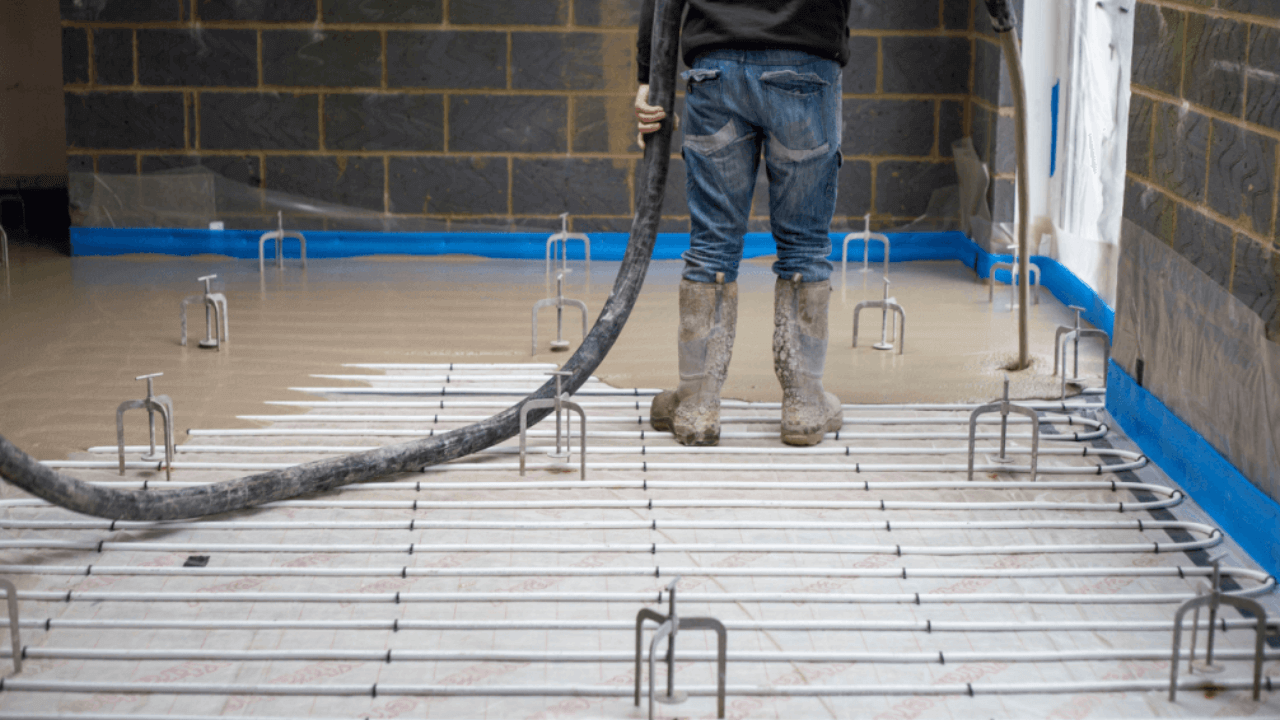
If you are considering underfloor heating or repairing an aged concrete floor, liquid screed is the optimal choice. It’s a highly versatile product with multiple uses, fast installation, and flexible formulations for specific uses. In this article, we’ll explore what liquid screed is, where it can be used, and how to choose the right formula for your project.
What is Liquid Floor Screed?
It is a flowing, easy-to-lay variant of floor screed, used as a finishing layer on top of a variety of sub-floors. Once the screed has dried, it creates a smooth and level surface, perfect for laying floor finishes like carpet or vinyl. Even uncovered, liquid screed is a hard-wearing surface that can withstand significant foot traffic in domestic, commercial, and industrial settings.
While self-compacting concrete has similar properties and uses, it’s not the same as liquid screed. Both can be used for underfloor heating, but self-compacting concrete can be used to build structural foundations, while screed cannot.
What is Liquid Screed Made of?
Though similar to concrete, it’s not the exact same stuff; liquid screed contains a binder, aggregates, water, and special additives that modify the screed’s properties to suit the intended purpose.
Anhydrite screed contains calcium sulfate and is commonly used for underfloor heating setups. Cement-based liquid screed contains ordinary cement and is typically used for areas exposed to outdoor environments. Additional additives can be included to accelerate screed drying or maintain strength at thinner thicknesses.
The Many Uses of Liquid Screed
At EasyFlow, we’ve poured liquid screed for a diverse range of projects, both commercial and domestic, from underfloor heating to strengthening subfloors. Here is the comprehensive list of applications we have made over the years.
Floor Repair & Revitalisation
For minor cracks, flakes, and pitting, liquid screed can cover these unsightly signs of wear and revitalise a concrete floor to look brand new. This is commonly done for commercial and public properties, like football stadiums, that receive a lot of wear and tear over so little time.
No special formulations are needed for floor repair; any high-quality liquid screed is sufficient. Screed can’t repair more serious issues, like cracks caused by settlement or other structural defects. That requires specialist underpinning services.
Floor Levelling
For older domestic and commercial properties, the subfloor can shift naturally or wear over time, creating uneven floors. Because liquid floor screed is self-levelling, it is the most effective way to level a surface. Even new build projects use liquid screed to quickly level floors and allow projects to stay on schedule for the next stage of construction.
No special formulations are required for floor levelling, though we recommend fast-drying and ultra-thin formulations due to their minimal screed drying time.
Strengthening and Wear Resistance
Commercial and industrial properties like warehouses and retail spaces typically face high floor loads and higher-than-usual foot traffic. High-strength liquid screed formulations offer a highly durable surface that can withstand the increased loads and wear.
As mentioned, high-strength or “XS” formulations are necessary for this specific application. Regular screeds and self-compacting concrete just don’t offer the same levels of compressive strength and rigidity.
For Underfloor Heating
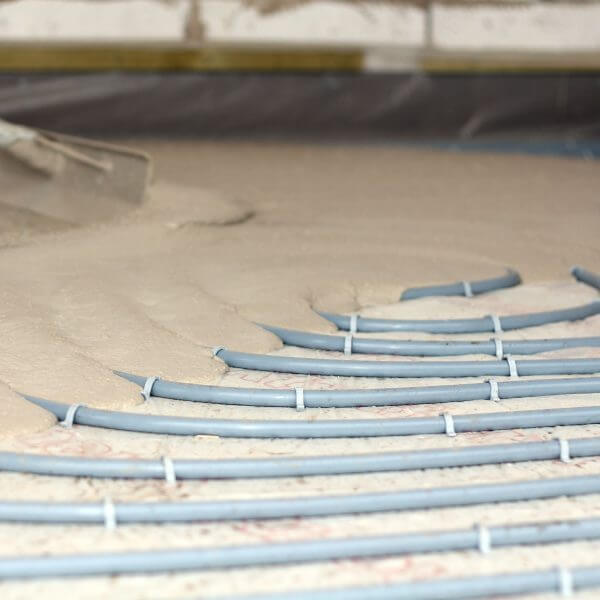
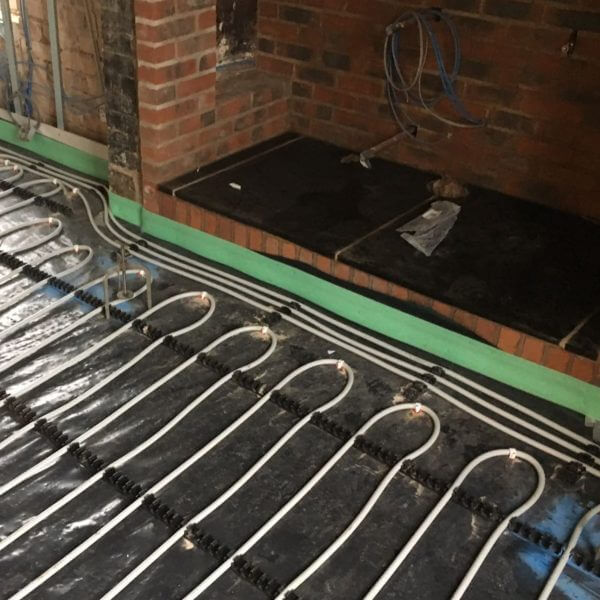
Whether you are installing wet or electric underfloor heating, it needs to be covered with a material that evenly distributes the heat. Liquid screed is objectively the best material suited to this task, as it creates a void-free finish.
Self-compacting concrete can be used to cover underfloor heating pipes, but anhydrite screeds are the more thermally efficient choice.
Sound Proofing
Liquid screed is highly effective for soundproofing, particularly in multi-level buildings and when combined with acoustic insulation. Screed reduces both impact noise and airborne sound transmission thanks to its high density, making it a suitable option for commercial properties and apartments that aren’t compliant with Building Regulations Part E.
Anhydrite screed, particularly variants designed for soundproofing or thin application, is the best choice for soundproofing. Fast-drying screeds can be used, but commissioning the heating can reduce the screed drying time considerably, speeding the process up regardless.
What is the Life Expectancy of Liquid Screed?
It can last at least 30 years before it starts to show signs of wear, but many screed floors last well beyond that. The true lifespan depends on how you treat it and how well it was installed. If it’s constantly exposed to issues like water leaks, or if it wasn’t allowed to cure correctly, the life expectancy may be lower.
Need Help With Liquid Screed?
EasyFlow can provide you with a quality screeding service with a range of innovative, liquid screeds to suit your specific requirements. Whether you have a residential or commercial property, our liquid screed experts can provide a full-service installation, from measurement to installation. Just complete the form with your project details, and a member of the team will be in contact as soon as possible.
Where To Find Us