
The Client’s Aftercare Guide for Liquid Screed
Many commercial construction firms across the UK rely on EasyFlow for retrofit underfloor heating and floor refurbishments delivered with both efficiency and attention to detail. And one question we’ve been asked many times is “how do I explain how to take care of the floor and commission the underfloor heating system to a client?”
Today, we’ve put together this comprehensive explanation of our Heating and Screed Aftercare Guide, with everything you need – whether you are preparing for project handover, or continuing work after the floor screed has been installed.
Immediately after Installation
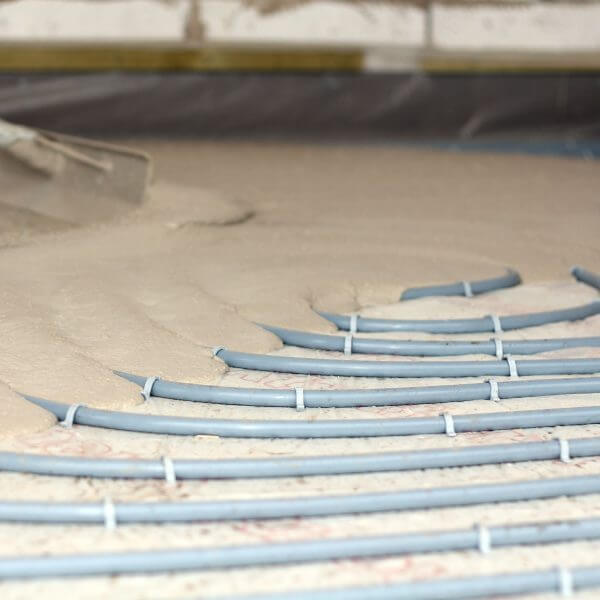
Once the floor screed has been poured and tamped down, the environment needs to be sealed. All rooms need to be protected from sunlight, rain and frost. The floor screed itself must not be sealed under a membrane – it needs air to cure.
Once 7 days have passed, construction of partition walls, kitchen units, and stairs can begin.
How Should Liquid Screed be Left to Dry?
Liquid floor screed needs to be left alone for 24-48 hours to dry to a walkable state. After this, light traffic can start walking across the floor, but it needs to be dry before floor finishes can be laid. Liquid screed drying time starts at 1mm per day, up to 40mm of depth, then 0.5mm per day onwards.
The only exception is when a fast-drying screed is used. Quick-drying screed is roughly 60% faster to set and fully dry. For example, a standard screed depth of 50mm can take 60 Days to fully dry. The same depth in fast-drying screed would be around 14-21 days.
Can Underfloor Heating Speed Up the Drying Process?
Yes, as part of the commissioning process, your underfloor heating installation will speed up the screed drying time. This cannot be done until at least 7 days have passed since the floor screed was installed.
Using the previous 50mm depth example, force-dried screed can be reduced from 60 days to around 21 days.
Underfloor Heating Commissioning
When 7 days have passed, a commercial underfloor heating setup should be ready for commissioning. This is a process of gently warming the floor that takes around 21 days:
- Set the flow temperature at 25°C for 3 days.
The boiler flow temperature is set with the blending valve at the manifold or at the boiler. This isn’t set by the room thermostat. - Increase the temperature by 5°C every day until you reach 50°C.
- Leave the temperature at 50°C for 3 days.
- Decrease the temperature by 5°C every day until you reach 25°C.
- Turn off the underfloor heating installation for 48 hours.
Bear in mind, these temperatures and time lengths may need to change, based on the property’s unique conditions. Make sure you note down any special instructions provided for client handover, especially when dealing with retrofit underfloor heating in very old buildings.
Two Weeks After Installation
Whether commercial underfloor heating has been installed or not, the floor screed will need to be sanded 14 days after installation. Lightly abrade the surface to aid absorption of any floor primers and remove surface laitance.
Surface laitance is a powdery layer that forms on top of curing floor screed roughly 10 days after installation, regardless of the screed drying time. If it isn’t sanded away, it will interfere with any primers, polishes, and adhesives.
Final Inspection
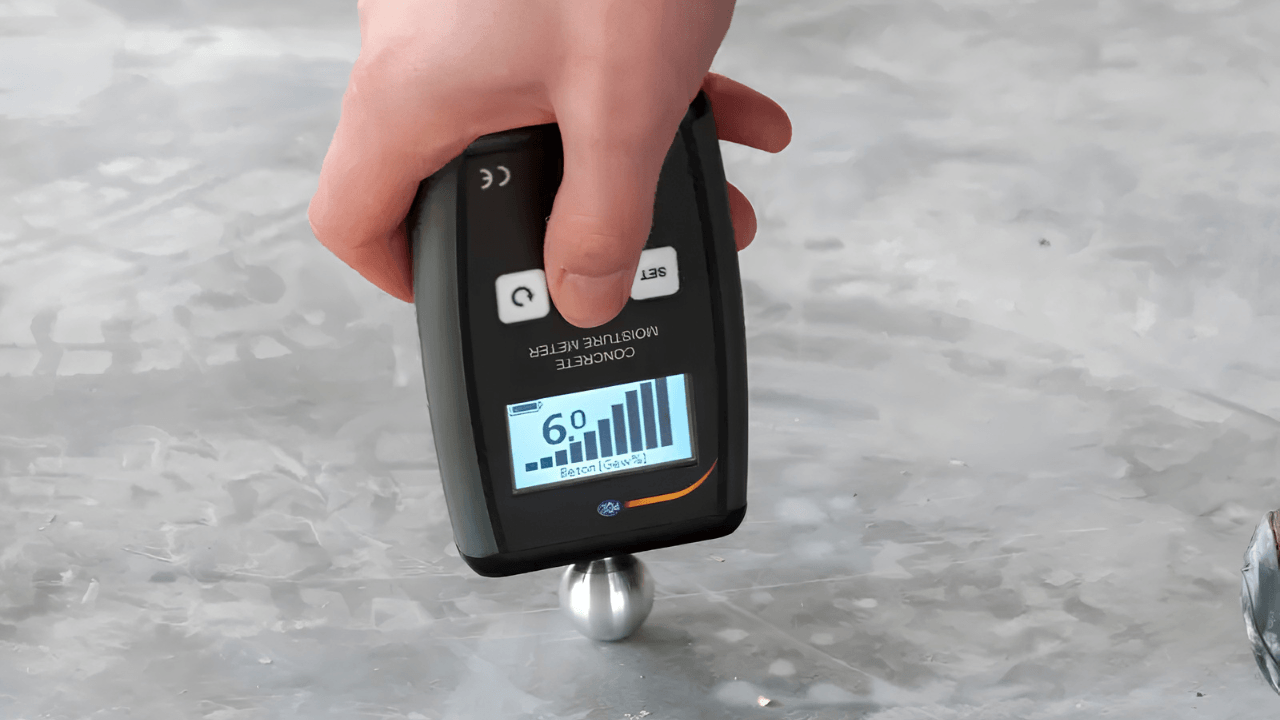
Once your estimated screed drying time has passed, we highly recommend you conduct a final screed moisture test before laying the final floor finishes. This is because heat, humidity, and unique site conditions can affect the evaporation rate. A screed floor is considered dry when it has a Relative Humidity (RH) reading of 75% or less, a Moisture Content (MC) reading of under 5%, or a Carbide Method (CM) reading under 2.5%.
When Will Underfloor Heating be Ready for Floor Finishes?
An underfloor heating installation will be ready for the final floor finishes once commissioning is complete. Installing the floor finish while commissioning takes place can cause adhesives to fail. Furthermore, if an issue occurs during commissioning, it could damage the floor finish.
Ongoing Maintenance
Floor screed needs virtually no maintenance once it’s fully dried; all the client has to do is keep it clean. At most, polished or painted screed floors will need occasional resealing every few years, depending on how heavy foot traffic is and the type of polish used.
EasyFlow is here to support you at every step during and after installation. Our floor screed aftercare guide can be printed and handed to clients, including information for clients with retrofit underfloor heating. If you require any further information, just contact us by phone or email to discuss your requirements.

Where To Find Us