
Which Underfloor Heating System is Best For You?
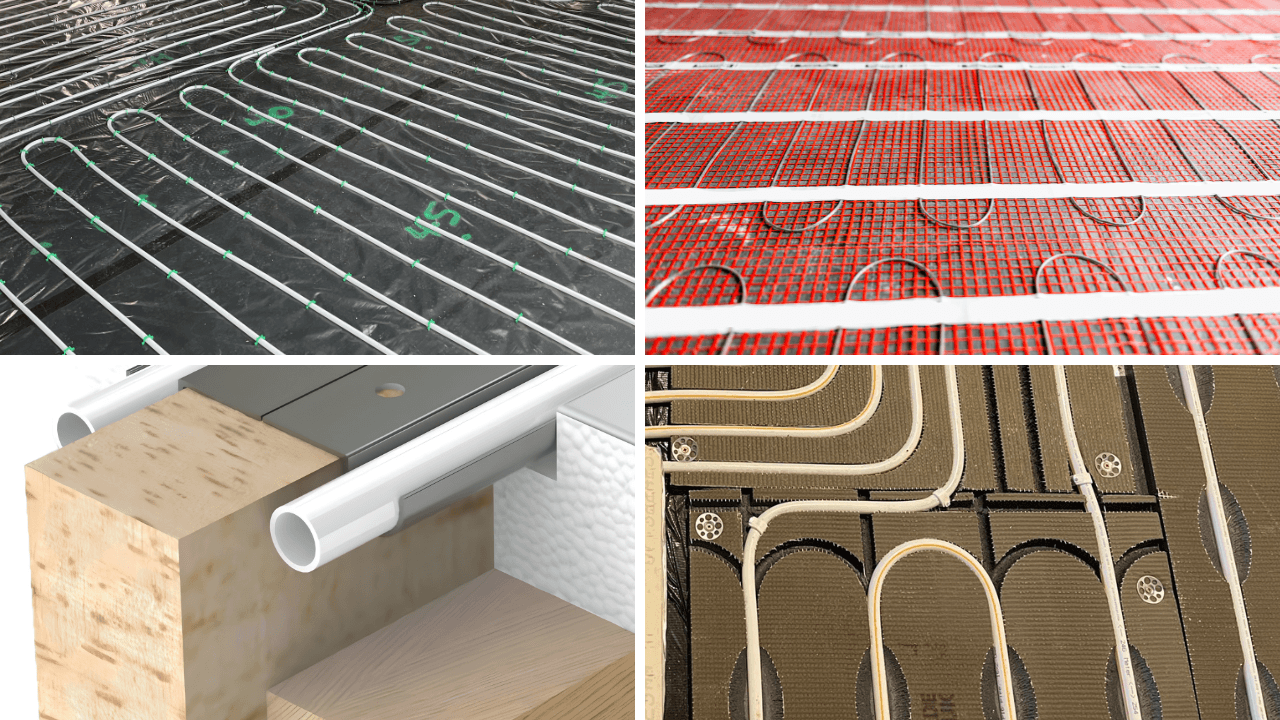
Whether you are retrofitting underfloor heating, or including it in a new build or extension, you’ll no doubt be aware that it comes in many different configurations, each with their advantages and disadvantages. In this guide, we’ll break down each underfloor heating system and help you decide which system best suits your property and your needs.
What is Wet Underfloor Heating?
Wet underfloor heating works very similarly to central heating radiators. A heat source like a boiler will heat up water, which is sent through a network of pipes to distribute heat throughout the property.
Where radiators emit heat from a small condensed unit, wet underfloor heating distributes heat evenly through pipes embedded in floor insulation or floor screed. Radiators have to run very hot at 60-70°C to compensate for their uneven distribution, but wet underfloor heating doesn’t need to do this – a flow temperature of 30-45°C is often enough to achieve the desired ambient room temperature.
There are three wet underfloor heating systems to choose from:
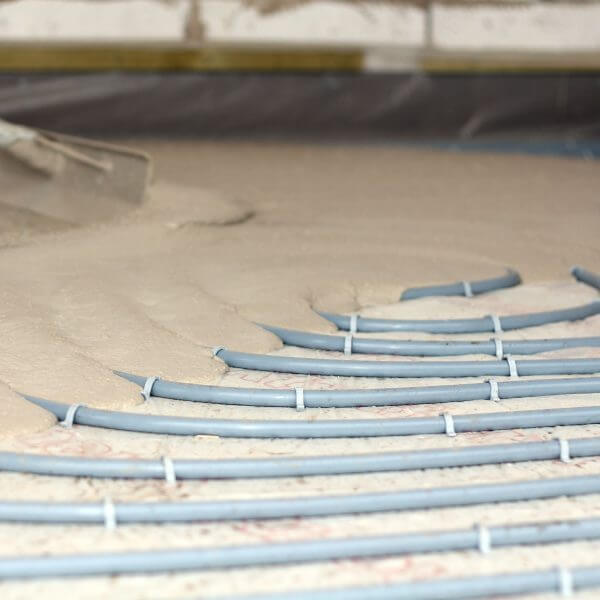
- Solid Floor – The pipes are laid on top of floor insulation and covered in liquid screed, a cement material that forms a new subfloor and maximises heat distribution.
- Low-Profile – Where build height is a concern, the pipes can be encased in floor insulation and topped with a thin floor leveller.
- Suspended – If the sub-floor is suspended over joists, the pipes and insulation can be laid in between these joists.
No matter which system you choose, you can expect it to last up to 50 years, and longer with good maintenance. It’s the most popular UK underfloor heating choice for new builds and retrofits with functional heat sources but ageing radiators. It’s compatible with heat pumps, runs far more efficiently than brand-new radiators, and of course, saves on gas utility bills without sacrificing comfort.
What is Electric Underfloor Heating?
Electric underfloor heating is a modern space heating system and an alternative to water-based heating solutions. An electric current is passed from the mains through electric cables embedded in the floor. This electric current is then converted into heat and radiates upward to heat the room.
Manufacturers produce several types of electric underfloor heating configurations, but they only have minute differences in build height, materials required, and operational performance. To make it easier for you, we’ve simplified them down into the following setups:
- In-screed – The heating cables are encased in liquid screed (or a flexible tile adhesive suited to electric floor heating) to evenly distribute heat and prevent thermal shock in the final floor finish.
- Floating – The cable is encased in foil or sparsely placed to allow floor finishes to be laid without liquid screed.
It uses the same heating principles as wet underfloor heating, except no water or heat source is required. It has significantly lower installation costs with less labour and materials required. This makes it a more popular retrofit underfloor heating option for properties that do not have central heating, or require fast and inexpensive turnaround.
What is the Lifespan of Electric Underfloor Heating?
Depending on the quality of the electric cable, you can expect electric underfloor heating to last up to 30 years with regular use. This doesn’t mean they’re defective products. Most manufacturers provide a guarantee of 25 years, which is a testament to their quality and reliability – it’s simply a matter of time.
Without external factors, electric heating wires slowly wear down over time. Older wires become more resistant, requiring more electricity than before to produce heat. After 30 years, you may wish to consider replacing the system to reinstate its operational efficiency.
UK Underfloor Heating Systems at a Glance
|
System |
Installation Costs & Labour | Build Height | Heating & Cost Efficiency | Maintenance Needs |
Best for |
|
Solid Floor |
Most expensive to install – requires liquid screed, floor insulation, and sufficient floor preparation. | 30-100mm – depending on liquid screed and floor insulation thickness. | Most efficient – faster to heat and cheapest running costs*. | Annual servicing of the heat source and manifold. | Solid concrete floors in retrofits and new builds. |
|
Low-Profile |
Moderately expensive – requires thin floor insulation with minimal floor preparation. | 20-26mm – Specially designed for minimal build height. | Highly efficient – more heat loss from reduced insulation. | Annual servicing of the heat source and manifold. | Retrofits with limited build height available or suspended floors. |
|
Suspended Floor |
Moderately expensive – requires cavity insulation and full floorboard access. | Less than 1mm – all piping and insulation is installed in the voids between joists. | Highly efficient – slower to heat due to wooden floors’ slower heat transfer rate. | Annual servicing of the heat source and manifold. | Retrofits and new-builds with suspended wooden subfloors. |
|
Electric In-Screed |
Less expensive – Requires screed or flexible tile adhesive, floor insulation, and sufficient floor preparation. | 30-100mm – depending on liquid screed and floor insulation thickness. | Moderately efficient – slow to heat and higher running costs*². | Electrical safety tests once every 2-3 years. | Solid concrete floors, or building extensions. |
|
Electric Floating |
Least expensive to install – only requires floor insulation with minimal floor preparation. | 15-100mm – it depending on floor insulation thickness. | Moderately efficient – slow to heat and higher running costs*². | Electrical safety tests once every 2-3 years. | Retrofits and extensions with limited build height or suspended wooden subfloors. |
* Based on the October 2026 price cap of gas per kWh and a system used in conjunction with a combi gas boiler.
*² Based on the October 2026 price cap of electricity per kWh used in October 2026. More cost-efficient when combined with on-site renewable energy generation.
Which Type of Underfloor Heating is Best?
Wet systems are best for new builds and retrofits where there is an existing heat source and radiator system. Though more expensive to install, the system lasts longer and has excellent operational efficiency. Electric heating is best for extensions and lower-budget retrofits, especially where there is no heat source that could support water-based heating. Though less operationally efficient, the costs of running electric heating can be offset with on-site renewable energy generation.
Ready to Retrofit Underfloor Heating?
EasyFlow are proud to be a leading UK underfloor heating installer, using CAD software to design the best system for operational performance in your property. We have decades of experience installing all systems discussed in this article, alongside floor insulation and heat pumps to ensure your property has the most innovative and cost-effective heating solution.
Talk to us today or complete the form below for a no-obligation free consultation. Together, we’ll explore your options, answer your questions, and put together an estimate, no matter where you are based in the UK.

Where To Find Us